
The Exclusion Of Spouses As Beneficiaries Of A Trust
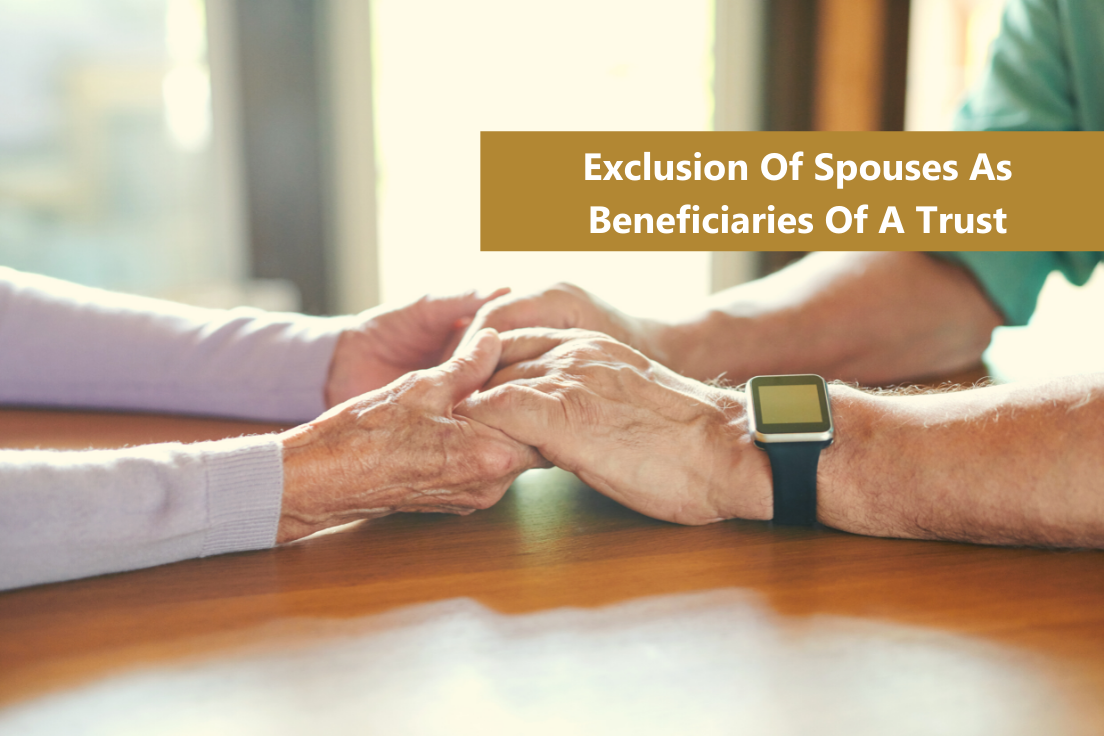
I see a lot of document providers out there offering trust deeds where they specifically exclude spouses of future generations from being beneficiaries. I note that these trusts are offered up by trust experts, not family law experts. They say that by excluding the spouse as a beneficiary you can then exclude the assets of the trust from being assets of the marriage. So if you were to follow that same argument, if the husband owns shares in a company in his own name then the wife is excluded from receiving any dividends or capital from the company so it must hold that the shares held in the company by the husband must also not be assets of the marriage. Of course, this is not the case.
What is the case is that you need to show that the party to the marriage has no control over the trust. You could actually make the wife a beneficiary but the person who decides who gets distributions has nothing to do with the party to the marriage. It may be his father or his brothers.
The case considered in this article is exactly that. The wife was a beneficiary of a testamentary trust and the husband tried to have the trust (or at least part of it) considered as part of the marital estate. He failed.
You will also note that this is case number 4! Yes, it appears they went to the family court 4 times. Lucky lawyers.
Paragraph (d) in the same article refers to Spry’s case but the information given is still relating to Rigby & Kingston. It does appear a bit confusing when you read it.
With all these “capital protected” type trusts it is risky to think that you can make your grandson the trustee and appointor of the trust but by excluding his wife as a beneficiary the assets will not be treated as assets of the marital estate. Far better to ensure that he is not the trustee or the appointor and that he merely has the ability to be considered as a beneficiary by the controllers of the trust. And then you can make the wife a beneficiary so that if need be you can stream income. But don’t take my advice. I am no family law expert. Neither are the lawyers selling these fancy trust deeds.
And finally, if protection from a family law claim is paramount then you should take advice from a family law expert, not a trust expert.



























![[Guide & Webinar] The Client Conversation Pack - Residential Property Investing After Tax Reform 2026 - October 2026](https://advisersdigest.com.au/wp-content/uploads/2026/10/FillingtheRoomPropertyWebinar-October2026-PromoImage2.png)